
Grounding Techniques for Anxiety: What Actually Works in the Moment

When anxiety spikes, the advice to “just calm down” is worse than useless. What actually interrupts the spiral is something concrete to do with your attention. That is what grounding is: a set of short, physical, deliberately boring exercises that pull you out of the thought loop and back into the room. This is a practical guide to the grounding techniques for anxiety we teach most often, why they work, and when they are not the right tool.
What anxiety does to the body
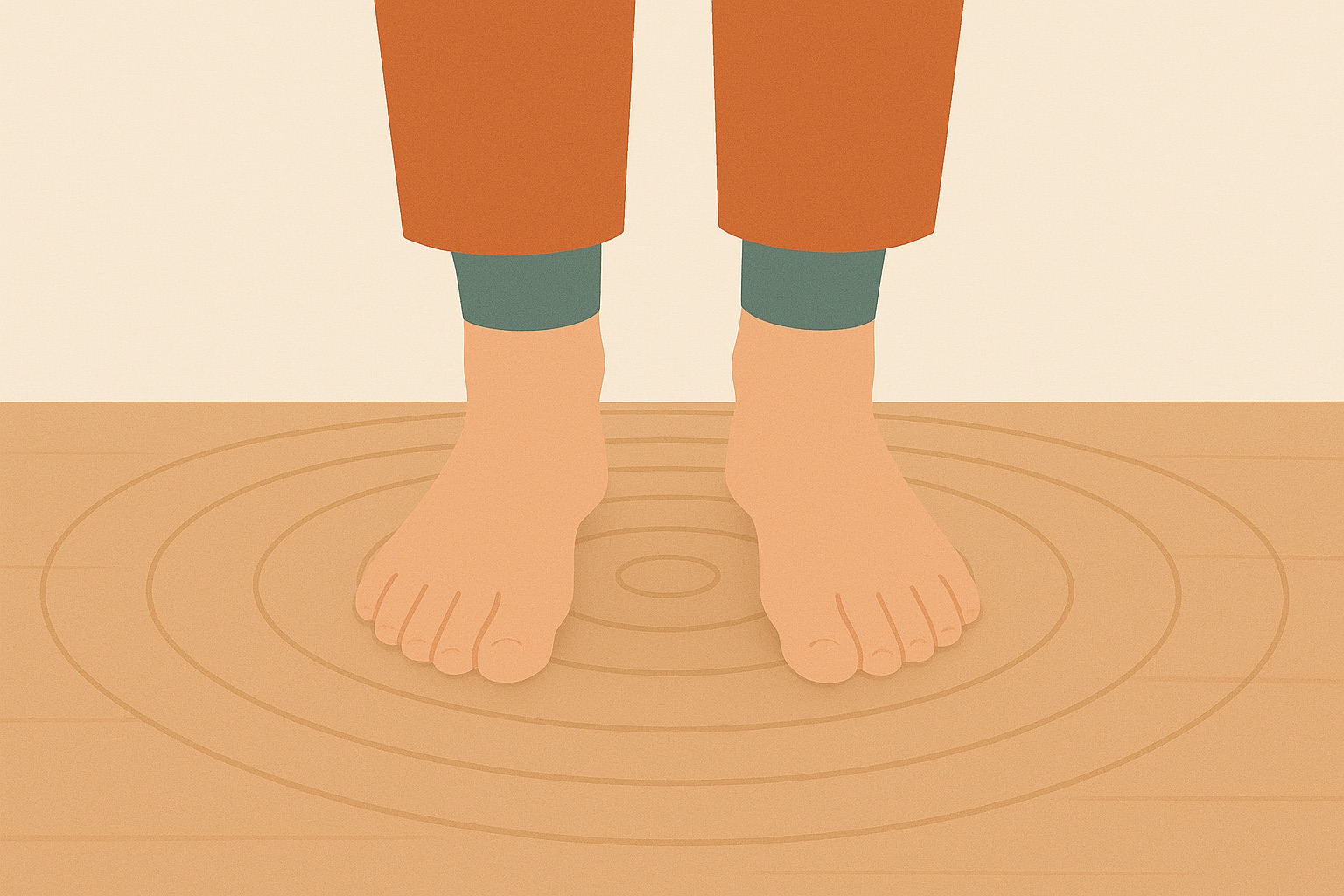
Grounding makes more sense once you know what you are interrupting. Anxiety is a threat response, and it is physical before it is mental. The physical symptoms of anxiety people describe most often are a racing heart, shallow fast breathing, tight chest, hot face, unsteady legs, an upset stomach, and a strange sense of distance from the room. In a peak — what people usually mean by anxiety attack symptoms — those can arrive within a minute and feel genuinely dangerous even though they are not.
Your attention has narrowed onto the threat. Grounding widens it again by giving your senses a task.
The 5-4-3-2-1 grounding technique
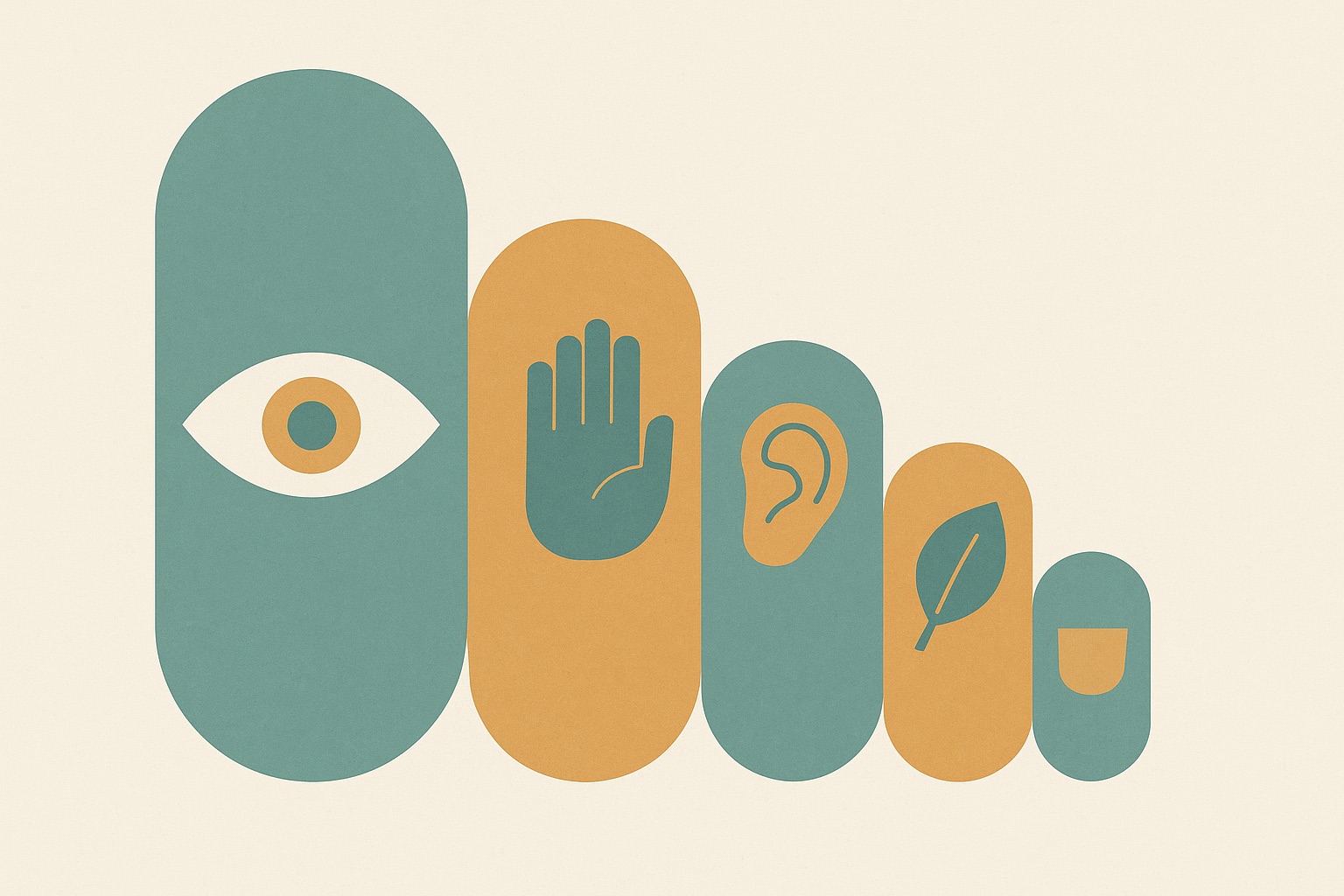
The best known of the grounding techniques, and the one worth learning first. Working slowly, name to yourself:
- 5 things you can see — be specific: the chipped corner of the table, not “a table”
- 4 things you can feel — the chair against your back, the seam of your sleeve
- 3 things you can hear — including the sounds you had filtered out
- 2 things you can smell
- 1 thing you can taste
The specificity is the active ingredient. “Five things I can see” done vaguely takes eight seconds and does nothing; done properly it takes a minute or two, and that is the point. The 54321 grounding technique works because naming detail requires the deliberate part of your attention, which cannot run at full speed alongside the alarm.
Breathing exercises for anxiety
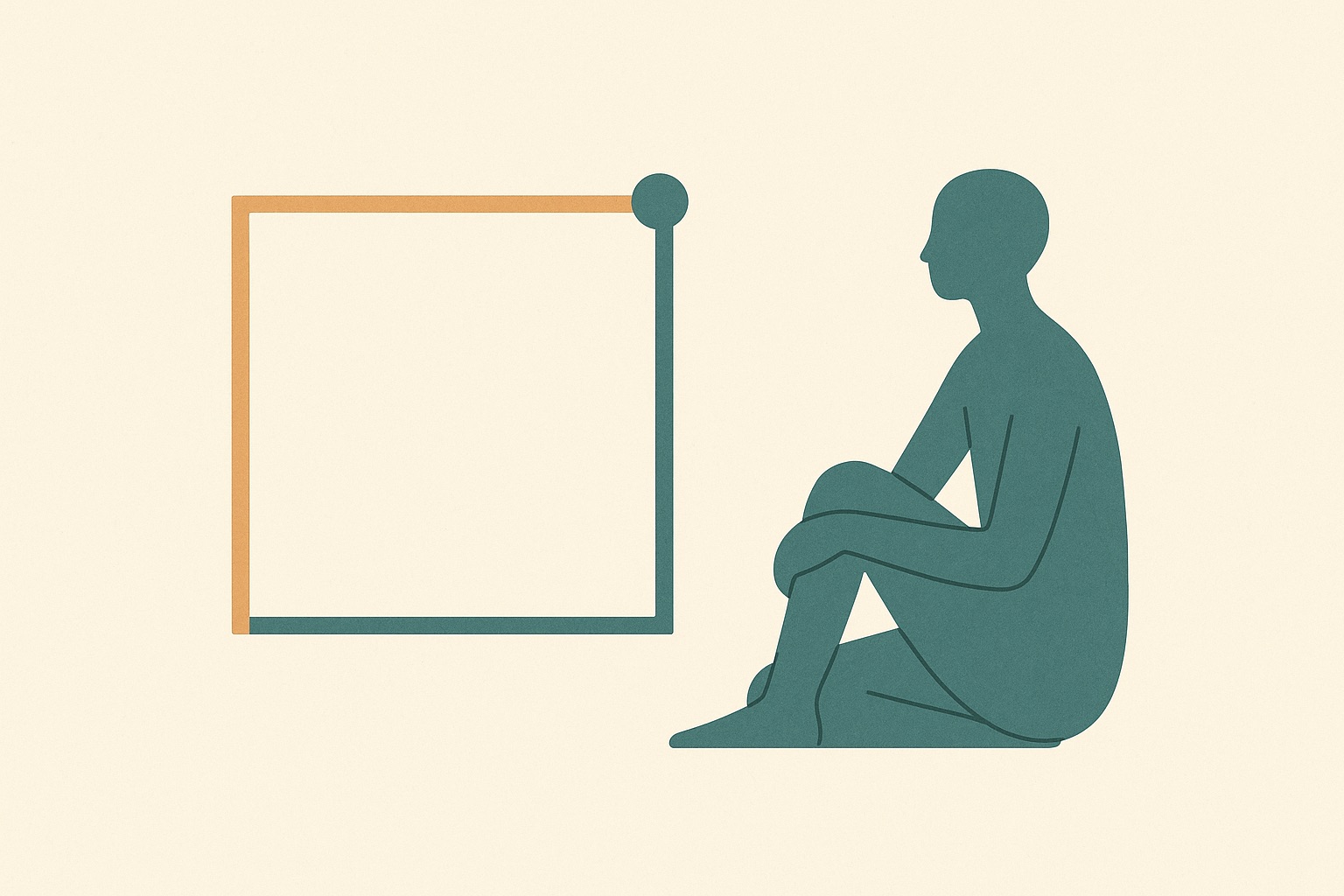
Most useful breathing exercises for anxiety share one feature: the out-breath is longer than the in-breath. That is what shifts the nervous system, not deep breathing as such — breathing deeply and quickly will make things worse.
- 4-7-8: in through the nose for four, hold for seven, out through the mouth for eight. Three or four rounds is plenty.
- Box breathing: in for four, hold four, out four, hold four. Easier to remember under pressure.
- Physiological sigh: two short sharp in-breaths through the nose, then one long slow out-breath. The fastest of the three.
Physical grounding, for when thinking will not work
Past a certain intensity, counting exercises are too demanding. Temperature and pressure still land: cold water on the wrists or the back of the neck, holding something cold, pressing both feet hard into the floor, or pushing your palms together and releasing. These are blunt on purpose. When someone asks how to calm anxiety in the middle of a peak rather than in advance, this is usually the honest answer.
Grounding when the anxiety is social
In social anxiety disorder, the threat is other people noticing you, so grounding has to be invisible. Feet on the floor, the texture of a cuff between two fingers, a slow out-breath, naming three things in the room without moving your head. All of these run silently while you stay in the conversation, which matters — leaving the room brings relief now and makes the next occasion harder.
If anxiety has started deciding what you do, skills alone will not be enough, and that is not a failure of the skills. A licensed therapist can work on the pattern underneath. Request an intake appointment with ACT Family Counseling, in person in Southern California or by telehealth anywhere in California.
What grounding does not do
Grounding manages a moment. It does not treat an anxiety disorder, and used as avoidance it can quietly become part of the problem. If anxiety is shaping what you will and will not do — the invitations declined, the roads avoided, the calls not made — then the useful work is on the pattern underneath, and that is what therapy is for. Our anxiety counseling uses approaches like CBT and exposure work alongside skills like these, and our therapists include clinicians who work with anxiety and panic. If low mood has arrived alongside it, which is common, our guide to the signs of depression may also be worth reading.
We see people in person at our offices in Ontario, Rancho Cucamonga, Redlands, Huntington Beach and Newport Beach.
We are contracted with Kaiser Permanente, Aetna, Cigna, Anthem Blue Cross, Blue Shield of California, Health Net, TRICARE and Optum among others — see the plans we are contracted with. Our staff confirms your benefits before your first session.
Request an intake appointment or contact us with a question first — either is a normal way to start.
Clinical content reviewed by Nicholas Fittante, Licensed Marriage and Family Therapist (LMFT #27161).
This article is for general information and is not a substitute for individual clinical advice, diagnosis or treatment.
If you are in crisis or thinking about harming yourself, call or text 988 (Suicide & Crisis Lifeline) or go to your nearest emergency room.