

The Stages of Grief: What the 5 and 7 Stage Models Really Describe

Almost everyone has heard that grief comes in five stages. It is one of the most repeated ideas in mental health, and one of the most misunderstood. The stages of grief were never meant to be a sequence you pass through in order, and they were not originally written about grieving people at all. Knowing what the model actually describes makes it far easier to recognise what you are going through — and to stop measuring yourself against a timetable that does not exist.
What are the stages of grief?
The five stages come from Elisabeth Kübler-Ross, who described them in 1969 after working with terminally ill patients. She was writing about how people face their own dying, not how survivors mourn. The model was applied to bereavement later, by other people. Kübler-Ross herself wrote that the stages were never intended to tuck messy emotions into neat packages, and that most people do not experience all five.
That history matters, because the most common thing we hear in grief counseling is some version of “I think I am doing this wrong.” Usually the person is grieving perfectly normally and comparing themselves to a staircase that was never a staircase.
The 5 stages of grief
In order, the five are denial, anger, bargaining, depression and acceptance. Read them as five things people commonly feel, in no set order and rarely all of them, rather than as five boxes to tick.
Denial
Less “I refuse to believe it” than a kind of numbness. The news does not land. People often describe moving through the first days on autopilot, or reaching for their phone to text someone who is gone.
Anger
Anger at the situation, at doctors, at the person who died, at yourself. It often surprises people and it frequently arrives with guilt attached. Anger and grief are closely linked, and anger is usually the more bearable of the two to feel.
Bargaining
The “what if” and “if only” loop. What if we had gone to the hospital sooner. If only I had called that night. It is the mind rehearsing alternative endings, and it can run for months.
Depression
The heaviness that arrives when the reality settles. Sleep changes, appetite changes, withdrawal from people. This is not the same as clinical depression, though the two can overlap and it is worth knowing the difference — our guide to the signs of depression covers where the line usually falls.
Acceptance
Not being at peace with the loss, and not being finished. Acceptance means the reality of the loss has been absorbed and life has started to reorganise around it. Most people describe it as the grief taking up a different amount of room, rather than going away.
The 7 stages of grief
You will also see a 7 stages of grief version, which splits the same ground more finely: shock, denial, anger, bargaining, depression, testing, and acceptance. The two extra steps — shock at the start and testing near the end — describe the initial physical jolt of the news and the tentative period of trying out ordinary life again. Neither model is more correct than the other. Both are maps of common reactions, not stages you are required to complete.

Anticipatory grief: when it starts before the loss
Anticipatory grief is grief that begins while the person is still alive — during a terminal diagnosis, a long illness, or a parent’s slide into dementia. Families often feel guilty about it, as though mourning early is a betrayal. It is not. It is one of the most common forms of grief and loss we see, and it is particularly hard because the grieving and the caregiving happen at the same time. If that is your situation, our dementia counseling work with families covers a lot of the same ground.
How long does grief last?
People are often caught off guard by the physical symptoms of grief: exhaustion that sleep does not touch, appetite changes, chest tightness, a fogginess that makes ordinary decisions hard. These are normal, and they usually ease before the emotional weight does.
There is no standard length, and anyone who gives you a number is guessing. What clinicians watch is not duration but direction: over months, is the intensity gradually easing, and are you able to function most days? Grief that is slowly loosening its grip is doing what grief does, however long it takes.
When grief becomes complicated
For a minority of people, grief stays at full intensity and does not begin to shift. Complicated grief — now recognised clinically as prolonged grief disorder — is diagnosed when intense yearning, preoccupation with the person who died, and difficulty resuming life persist beyond about a year in adults, and are still interfering with daily functioning. It responds to treatment, and it is worth naming rather than waiting out. Signs it may be time to talk to someone:
- The intensity has not changed at all over many months
- You are avoiding anything that reminds you of the loss, or cannot leave it alone
- Work, parenting or relationships have not begun to recover
- You are using alcohol or other substances to get through the evenings
- You are having thoughts of not wanting to be here
If any of that list sounds like where you are, that is a reasonable point to talk to a licensed therapist. You can request an intake appointment with ACT Family Counseling, in person in Southern California or by telehealth anywhere in California.
What grief counseling actually involves
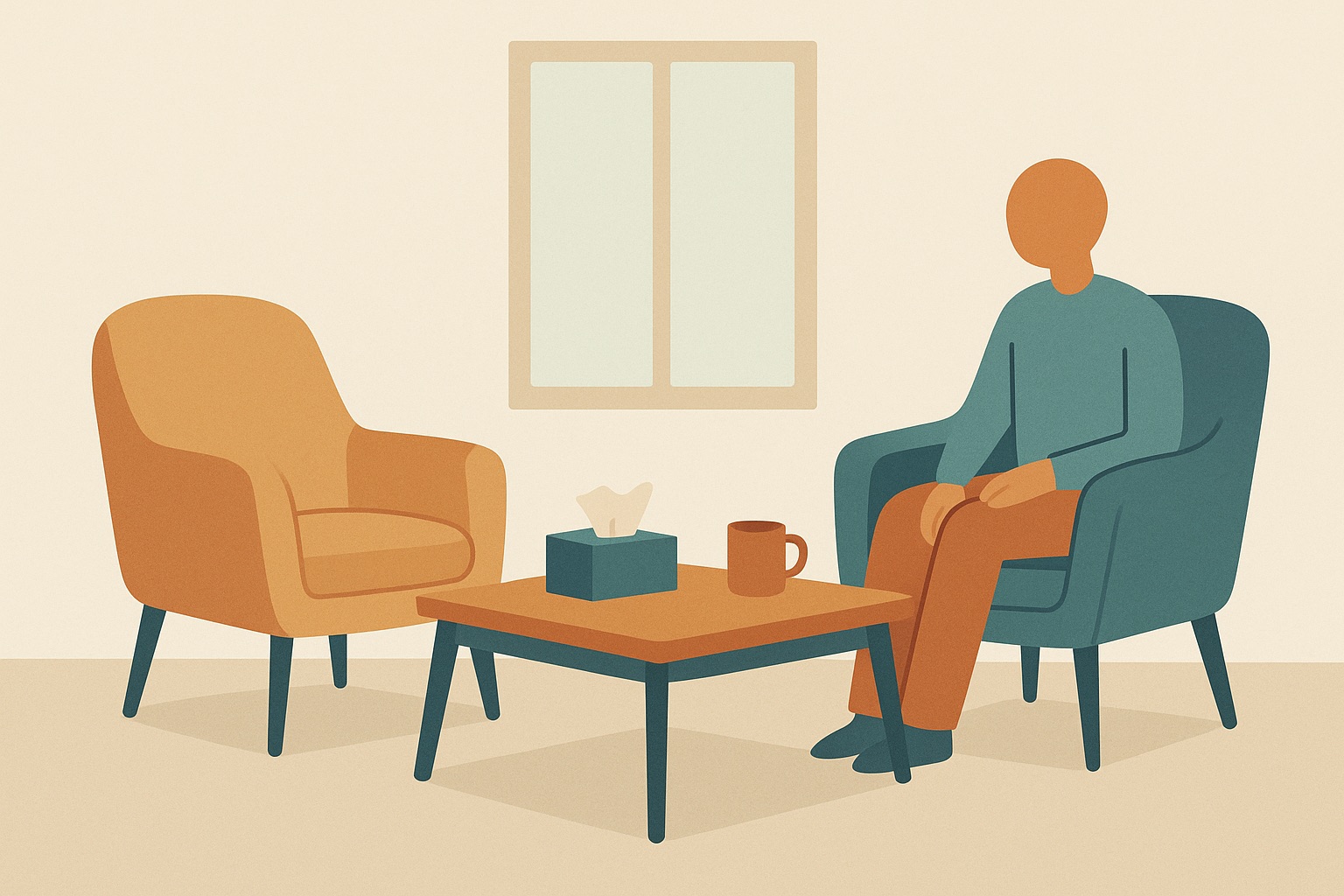
Dealing with grief is not something you have to do on your own, and the stages of grief and loss are easier to make sense of with someone alongside you. Grief counseling is not about hurrying you to acceptance. Most of the work is making room for the loss: telling the story of what happened, sorting through guilt and anger, deciding what to carry forward, and rebuilding a routine that does not depend on the person who is gone. Our grief counseling is available with a licensed therapist, and our therapists include clinicians who work regularly with bereavement, anticipatory grief and loss in families.
We see people in person at our offices in Ontario, Rancho Cucamonga, Redlands, Huntington Beach and Newport Beach.
We are contracted with Kaiser Permanente, Aetna, Cigna, Anthem Blue Cross, Blue Shield of California, Health Net, TRICARE and Optum among others — see the plans we are contracted with. Our staff confirms your benefits before your first session.
Request an intake appointment or contact us with a question first — either is a normal way to start.
Clinical content reviewed by Nicholas Fittante, Licensed Marriage and Family Therapist (LMFT #27161).
This article is for general information and is not a substitute for individual clinical advice, diagnosis or treatment.
If you are in crisis or thinking about harming yourself, call or text 988 (Suicide & Crisis Lifeline) or go to your nearest emergency room.