

PTSD Symptoms: The Four Groups, and What They Actually Look Like

Post-traumatic stress disorder is not a weakness of character and it is not a permanent sentence. It is what happens when a threat response that was entirely appropriate at the time fails to switch off afterwards. This is a full guide to PTSD symptoms — the four groups clinicians actually look for, what a trauma response does in the body, how complex PTSD differs from the classic picture, and what treatment involves.
What PTSD is, in plain terms
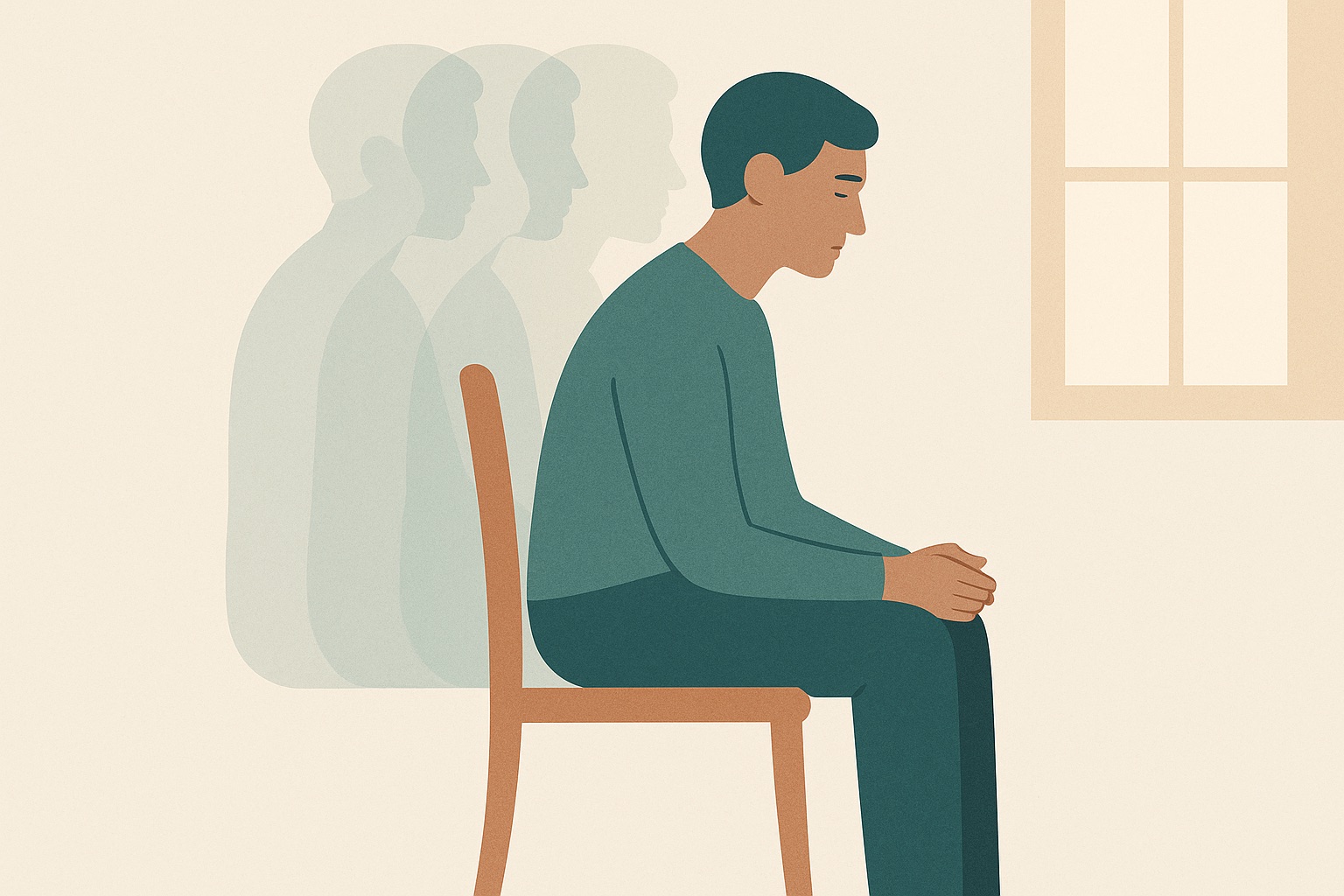
During a life-threatening event your nervous system does something remarkable: it drops everything non-essential and readies you to survive. Time distorts. Pain recedes. Memory records in fragments — sound, smell, image — rather than as a tidy narrative. That is the system working correctly.
PTSD is what happens when it does not stand down. The event ends; the nervous system keeps treating the world as though it has not. Those fragmentary memories, never filed as past events, keep presenting themselves as though they are happening now. Most people who go through something traumatic do not develop PTSD — the majority recover on their own within a few months. When symptoms persist beyond about a month and are interfering with daily life, that is when it is worth getting assessed.
The four groups of PTSD symptoms
1. Re-experiencing
The event intruding on the present. Unwanted memories that arrive without being summoned. Nightmares. Flashbacks, which are widely misunderstood — most are not cinematic; more often it is a sudden flood of the physical sensations of the moment, sometimes with no picture at all. Intense distress or a physical reaction at a reminder: a smell, a tone of voice, a particular quality of light.
2. Avoidance
Steering around anything connected to the event. Places, people, conversations, films, routes. It also runs inwardly — refusing to think about it, staying relentlessly busy, drinking. Avoidance works, briefly, which is exactly why it entrenches. Every successful avoidance teaches the nervous system that the danger was real and that escape was the correct move.
3. Changes in thinking and mood
Persistent shame, guilt or self-blame, frequently about things that were never within the person’s control. A bleak read on the world or oneself: nobody can be trusted, I am permanently damaged. Losing interest in what used to matter. Emotional numbness — feeling flat or detached even from people you love, which frequently distresses people more than the fear does. Gaps in memory for parts of the event.
4. Hyperarousal
Hypervigilance is the hallmark: constantly scanning, sitting facing the door, unable to relax in a crowd, checking locks. Alongside it come an exaggerated startle response, irritability or anger that arrives faster and larger than the situation warrants, difficulty concentrating, and sleep that will not come or will not hold.
The trauma response: more than fight or flight
Most people know fight flight freeze. There is a fourth, and it matters enormously for people whose trauma happened inside a relationship. The fawn response is appeasement — placating the threat, anticipating what it wants, becoming useful and agreeable to stay safe. It is highly effective in a household you cannot leave, and it persists long afterwards as compulsive people-pleasing, an inability to identify your own preferences, and difficulty recognising mistreatment as mistreatment.
None of the four is a decision. All of them are automatic, selected below conscious thought in a fraction of a second. This is worth stating plainly because so many people carry years of shame for having frozen or complied instead of fighting or fleeing.
Complex PTSD
Classic PTSD usually follows a discrete event. Complex PTSD follows repeated or prolonged trauma from which escape was difficult or impossible — childhood trauma, long-term abuse, captivity, sustained neglect. It carries the four symptom groups above, plus three more: severe difficulty regulating emotion, a deeply negative and persistent sense of self, and serious difficulty in relationships.
Because it develops during the years when personality forms, complex PTSD tends to be experienced as identity rather than as symptoms. People arrive saying “this is just how I am,” not “something happened to me.” That distinction usually takes time in therapy to come into focus.
Trauma bonding
Trauma bonding is the powerful attachment that can form toward someone who is causing harm, and it is one of the most misunderstood things we see. It is built by intermittency — cruelty and kindness alternating unpredictably — which is, as it happens, the most powerful reinforcement schedule known to psychology. The bond it produces is genuinely stronger than one formed by consistent kindness. This is why “why do they stay” is the wrong question, and why leaving is rarely a single decision. If this is your situation, our domestic violence counseling is built for it.

What else travels with PTSD
PTSD rarely arrives alone. Depression is the most frequent companion — our guide to the signs of depression covers the overlap. Anxiety and panic are common, and the grounding techniques for anxiety we use are drawn largely from trauma work. Alcohol and substance use often begin as an attempt to get some sleep or quiet the hyperarousal.
PTSD treatment: what actually works
PTSD responds well to treatment, and that is a statement about the evidence rather than a promise about any individual. The established approaches share a shape: build enough stability and regulation first, then approach the memory deliberately rather than avoiding it, so the nervous system can finally file it as something that happened rather than something happening.
- Trauma-focused CBT — working on the meanings attached to the event and the beliefs built on top of them
- EMDR — processing the memory alongside bilateral stimulation, which for many people is less verbally demanding than talking it through
- Prolonged exposure — approaching avoided memories and situations gradually and on purpose
- Stabilisation and skills work — sleep, grounding, regulation; often the necessary first phase rather than an alternative
A note on pacing that matters: going at the memory before there is enough stability in place tends to overwhelm rather than help. A good trauma therapist spends real time on the groundwork, and that is not the therapy being slow.
If you recognise yourself in the four groups above and it has been going on for more than a month, that is the point at which an assessment is worth having. Request an intake appointment with ACT Family Counseling, in person in Southern California or by telehealth anywhere in California.
Getting help
Our PTSD and trauma counseling works with single-event trauma, complex trauma, and the trauma that arises inside relationships, and our therapists include clinicians trained in trauma-focused approaches. We do not carry out psychological testing; where a formal assessment is needed we will refer you on.
We see people in person at our offices in Ontario, Rancho Cucamonga, Redlands, Huntington Beach and Newport Beach.
We are contracted with Kaiser Permanente, Aetna, Cigna, Anthem Blue Cross, Blue Shield of California, Health Net, TRICARE and Optum among others — see the plans we are contracted with. Our staff confirms your benefits before your first session.
Request an intake appointment or contact us with a question first — either is a normal way to start.
Clinical content reviewed by Nicholas Fittante, Licensed Marriage and Family Therapist (LMFT #27161).
This article is for general information and is not a substitute for individual clinical advice, diagnosis or treatment.
If you are in crisis or thinking about harming yourself, call or text 988 (Suicide & Crisis Lifeline) or go to your nearest emergency room.